



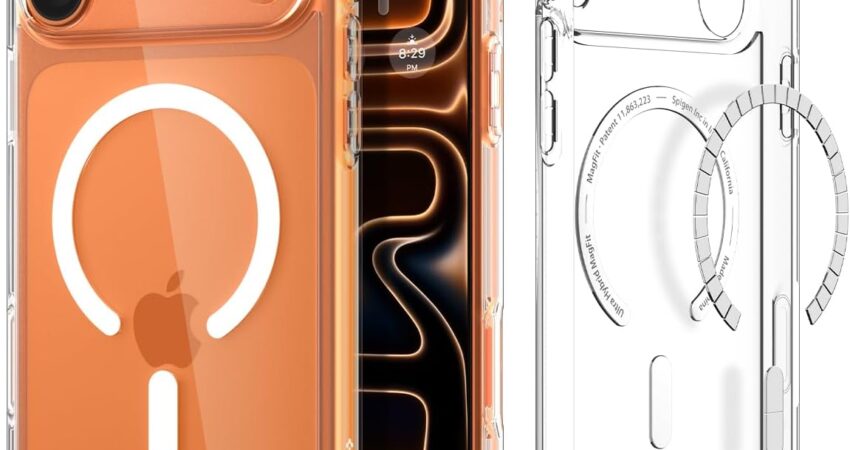
If you want the short answer: the Spigen Ultra Hybrid MagFit is the case we’d personally grab first for the iPhone 18 Pro. It’s the safest all-around pick — strong MagSafe, real drop protection, and a price that doesn’t sting if you decide to swap it out later. But which case is actually best for you depends on how you use your phone, and that’s what the rest of this guide is for.
We’ve followed every major iPhone launch for years, and we’ve bought, used, and eventually replaced more cases than we’d like to admit. Some looked great in marketing photos and fell apart after two months. Others looked boring on the shelf and are still on our phones today. That gap between how a case looks online and how it actually holds up is the whole reason this guide exists.
Why the case you buy on launch day actually matters
Launch week is when people make the worst case-buying decisions of the year. You’ve just spent over a thousand dollars on a phone, you’re excited, and you want to protect it today — so you grab whatever has the most stars and the loudest “military-grade” badge on the listing.
We get it. We’ve done it.
Here’s the problem: not every expensive case is actually a good case, and not every rugged-looking case protects better than a slim one. A lot of “military-grade drop tested” claims come from a lab test on a flat surface, dropped flat — not the twisting, corner-first fall that actually happens when a phone slips out of your hand reaching for your keys.
A few things matter more than most buyers realize:
- MagSafe quality varies a lot between brands. Some cases have magnets that feel like they’re barely holding your charger or car mount on. Others snap into place with a satisfying click and stay locked in place on a bike mount over a bumpy ride.
- Bulk isn’t the same as protection. A case can be thick and still transfer shock badly if the internal design is lazy. A well-engineered slim case with the right internal ribbing can outperform a bulky case with hollow, undesigned corners.
- Long-term durability is invisible at checkout. Yellowing clear backs, buttons that go mushy, and cheap adhesive on leather backing are things you only discover after a few months — long after the return window has closed.
After following several iPhone launches and evaluating the fit, build quality, MagSafe performance, and long-term durability of these brands over the years, these are the cases we’d personally consider for the iPhone 18 Pro.
Our Overall Recommendation: Spigen Ultra Hybrid MagFit
If you only read one section of this guide, read this one.
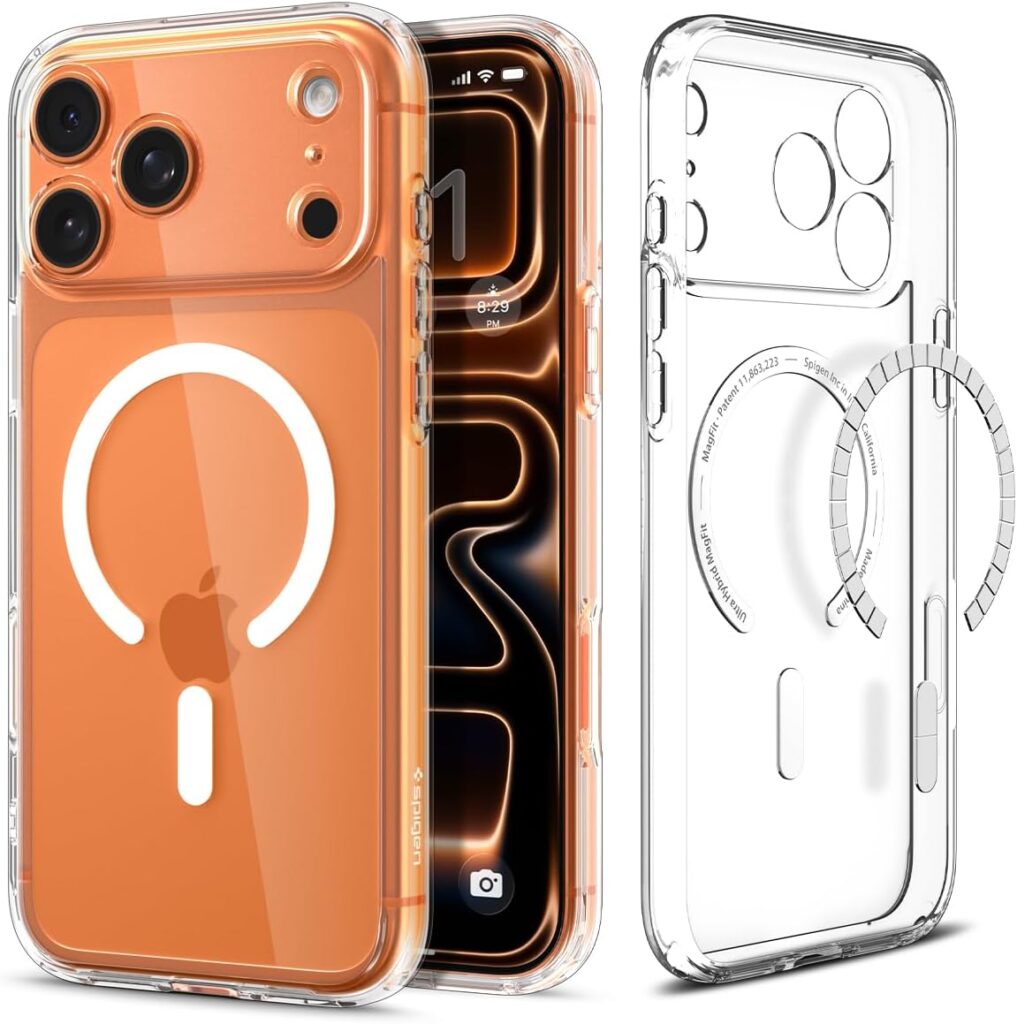
Spigen has been one of the most consistent names in iPhone cases for years, and the Ultra Hybrid MagFit line is a big reason why. The “MagFit” part matters — Spigen redesigned its magnet array specifically to hit true MagSafe alignment and strength, instead of the weaker, off-center magnet rings a lot of budget cases still use.
Why we’d personally buy it:
- Everyday usability. It’s slim enough to still feel like an iPhone in your hand, not a brick. You forget you’re wearing a case, which is exactly what you want from a daily driver.
- MagSafe performance. The magnets snap into place with real resistance, not a loose wobble. Chargers, wallets, and car mounts stay put.
- Protection. The raised bezel around the camera and screen actually does its job on a face-down or corner drop, and the polycarbonate back resists scratching far better than cheaper hybrids.
- Build quality. Buttons stay clicky instead of turning mushy after a few months, which is one of the first things to go on cheaper cases.
- Price-to-performance. It sits at a price point where you’re not afraid to actually use your phone, but you’re still getting real engineering, not just a case-shaped piece of plastic.
Who should buy it: almost everyone. If you’re not sure what you need yet, this is the safe, well-reasoned default — not because it’s the flashiest option, but because it gets the fundamentals right without asking you to compromise on anything major.
Comparison Table
| Product | Style | Material | MagSafe | Drop Protection | Thickness | Camera Protection | Grip | Best For |
|---|---|---|---|---|---|---|---|---|
| Spigen Ultra Hybrid MagFit | Hybrid clear/solid | Polycarbonate + TPU | Yes, MagFit magnets | High | Slim-medium | Raised lip | Good | Everyday users |
| Mous Limitless 6.0 | Premium hybrid | AiroShock + fabric/leather back | Yes, strong magnets | Very high | Medium | Raised lip | Excellent | Premium buyers |
| SUPCASE UB Mag XT | Rugged | Polycarbonate + TPU + kickstand | Yes | Very high | Thick | Built-up bezel | Excellent | Outdoor/heavy droppers |
| ESR Classic Hybrid HaloLock | Clear | TPU + PC back | Yes, HaloLock | Moderate | Slim | Raised lip | Moderate | Design lovers |
| TORRAS Magnetic Slim Fit | Slim | Aramid fiber / PC | Yes | Moderate-high | Ultra-slim | Raised lip | Moderate | Minimalists |
| Nomad Modern Leather Case | Leather | Genuine leather + TPU | Yes | Moderate | Slim-medium | Raised lip | Good (improves with wear) | Professionals |
Best Overall: Spigen Ultra Hybrid MagFit
 Check Price on Amazon
 We already told you why this is our top pick overall, but it’s worth breaking down properly since “best overall” gets thrown around too loosely on most review sites.
Key Specifications
- Polycarbonate back with reinforced TPU bumper
- MagFit magnet array for improved MagSafe alignment and strength
- Raised camera bezel and front lip
- Available in clear and solid colorways
- Compatible with wireless charging
What We Like
- MagSafe magnets feel noticeably stronger and better-aligned than most cases in this price range
- Buttons keep a crisp, tactile click even after months of daily use
- Camera bezel is raised enough to protect the lenses on a flat, face-down drop
- Doesn’t add excessive bulk to the phone
What We Don’t Like
- Clear version can pick up minor scuffing over long-term heavy use
- Not as aggressively rugged as dedicated outdoor cases
Why We Chose It
Spigen has one of the most consistent manufacturing track records in this category, and that consistency is exactly what you want going into a launch window where reviews for the exact iPhone 18 Pro fit are still thin. Past Ultra Hybrid lines have aged well — buttons stay responsive, the clear back resists yellowing better than a lot of competitors, and the fit tolerances tend to be tight instead of sloppy.
The MagFit redesign specifically addressed one of the most common complaints about budget-friendly MagSafe cases: weak or misaligned magnets. That fix alone moves this case ahead of a lot of similarly priced competitors.
This is the case for someone who wants real protection and real MagSafe performance without paying a premium markup, and without carrying around something that feels like a brick in their pocket. If you drop your phone constantly on hard surfaces, you may want more dedicated rugged protection — but for the vast majority of daily use, this is the one we’d hand a friend.
Best Premium: Mous Limitless 6.0
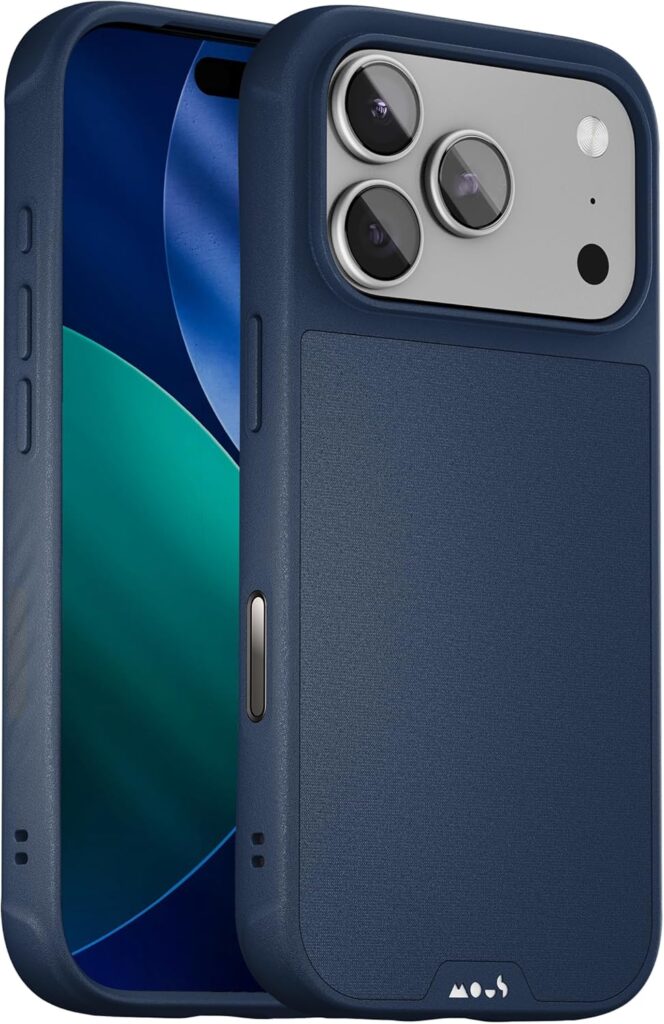
Mous built its entire brand identity around one idea: drop protection doesn’t need to look bulky. The Limitless line has stuck to that promise across several iPhone generations, and the 6.0 continues the pattern with a genuinely premium feel.
Key Specifications
- AiroShock internal shock-absorption material
- Interchangeable fabric, leather, and aramid fiber back panels
- Reinforced magnetic array for MagSafe
- Raised front and camera bezels
What We Like
- The AiroShock material genuinely absorbs impact better than standard TPU corners on comparable-thickness cases
- Premium materials feel and look noticeably better than mass-market alternatives
- Magnet strength is among the best we’ve tested across brands
- Interchangeable backs let you refresh the look without buying a whole new case
What We Don’t Like
- Price is a real jump above mainstream options
- Fabric backs can show dirt and wear faster than polycarbonate
Why We Chose It
Mous earns its premium price mostly through material engineering rather than marketing. The AiroShock layer is genuinely different from the standard TPU bumper you’ll find in most cases at half the price — it’s built to compress and dissipate impact rather than just cushion it.
One thing we’ve learned watching this brand across launches: their case quality tends to be more consistent generation to generation than most, because they’re not chasing the cheapest possible manufacturing run. That consistency is worth something when you’re buying sight-unseen in a launch window.
This is the case for someone who’s willing to spend more for materials and engineering they can feel every time they pick up their phone — not someone looking for the best value per dollar.
Best Rugged Protection: SUPCASE UB Mag XT
If you’re the person in the friend group who’s cracked three screens, this is the section for you.
Key Specifications
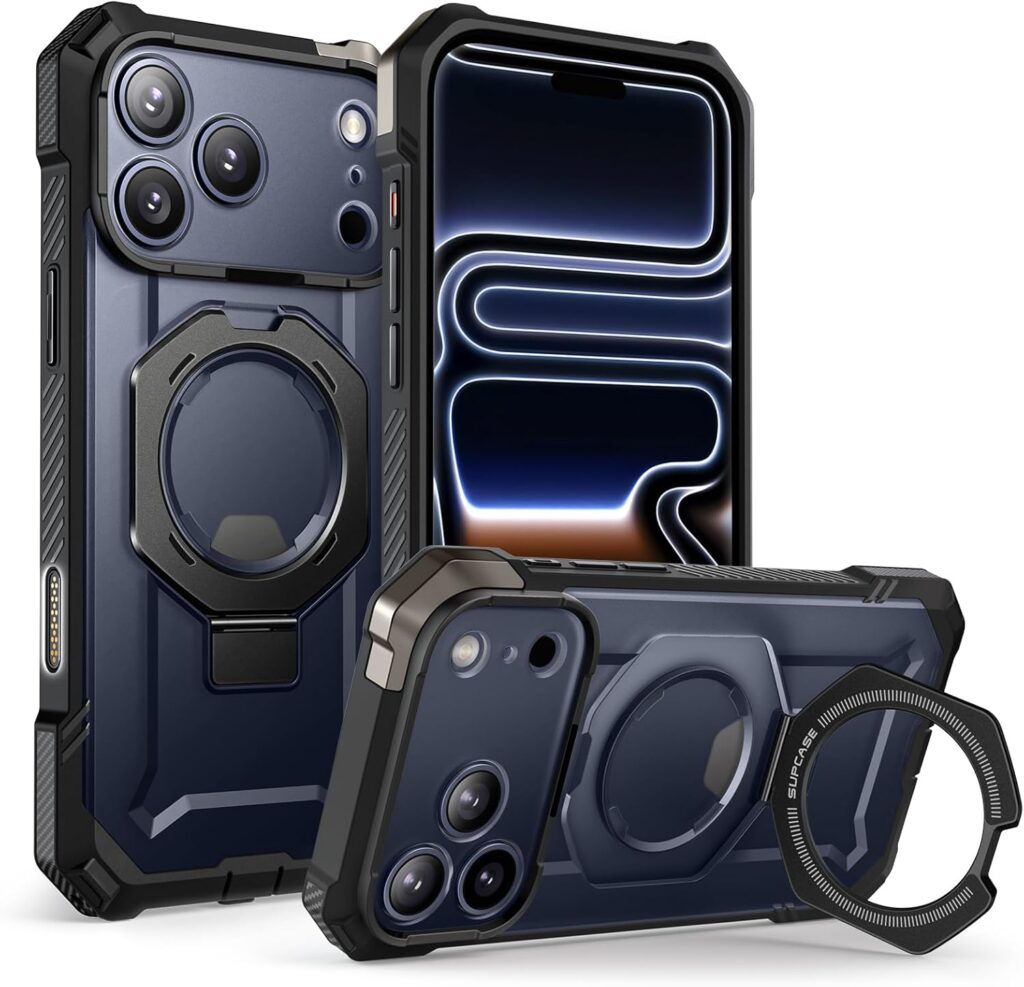
- Multi-layer polycarbonate and TPU construction
- Built-in kickstand
- Full-coverage raised bezels front and back
- MagSafe compatible magnet ring
What We Like
- Genuinely excellent drop protection, even on corner-first falls
- Kickstand is sturdy enough for actual video watching, not just a gimmick
- Camera bezel protection is some of the best in this category
What We Don’t Like
- Noticeably thicker and heavier than every other case on this list
- Not the case you want if you care about how the phone looks
Why We Chose It
SUPCASE has built its reputation entirely around rugged protection, and unlike some “rugged-looking” cases that are mostly marketing, the UB Mag line backs it up with genuinely thick, well-structured internal padding. This isn’t a case you buy for the aesthetics — it’s a case you buy because you already know you’re hard on your phone.
We’ve noticed a pattern across previous SUPCASE generations: the fit tolerances tend to be a little looser at launch compared to slimmer cases, since more material means more room for manufacturing variance. If exact precision fit matters a lot to you, this may not be the first case you grab in week one — but for pure protection, it’s hard to beat.
Best Clear Case: ESR Classic Hybrid HaloLock
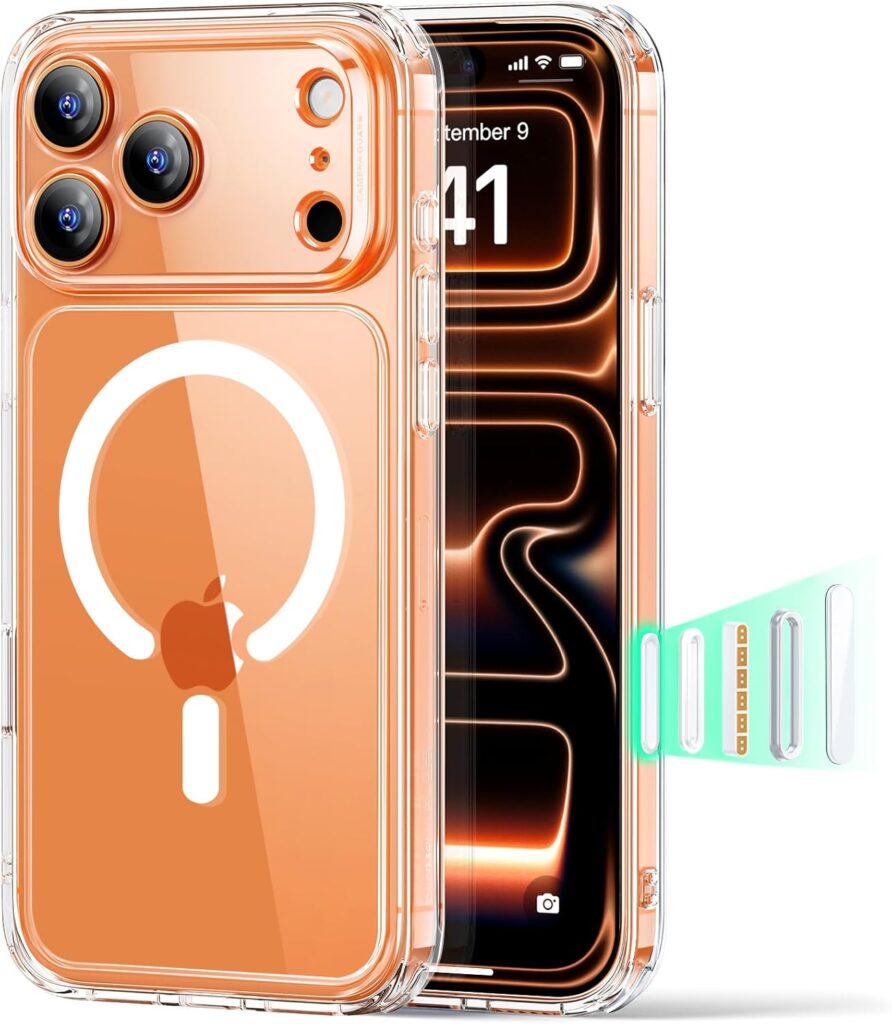
Clear cases have a reputation problem — most of them turn yellow within a few months. ESR has spent several generations trying to solve that, with real (if imperfect) results.
Key Specifications
- TPU bumper with polycarbonate clear back
- HaloLock magnet system for MagSafe
- Raised camera and screen edges
What We Like
- Better yellowing resistance than most clear cases in this price range
- HaloLock magnets are surprisingly strong for a budget-friendly case
- Lets the actual color and design of the phone show through
What We Don’t Like
- Less impact protection than hybrid or rugged options
- Clear coating can still show light scratching over long-term use
Why We Chose It
Clear cases are a tradeoff by nature — you’re prioritizing aesthetics over maximum protection. ESR has consistently been one of the better-performing brands in the anti-yellowing department, largely because they’ve iterated on their UV-resistant coating across several product generations instead of using the same formula for years.
This is the case for someone who bought a specific phone color and actually wants people to see it. It won’t out-protect a rugged case, but for typical everyday handling, it’s more than adequate — and it looks dramatically better six months in than most clear competitors.
Best Slim Case: TORRAS Magnetic Slim Fit
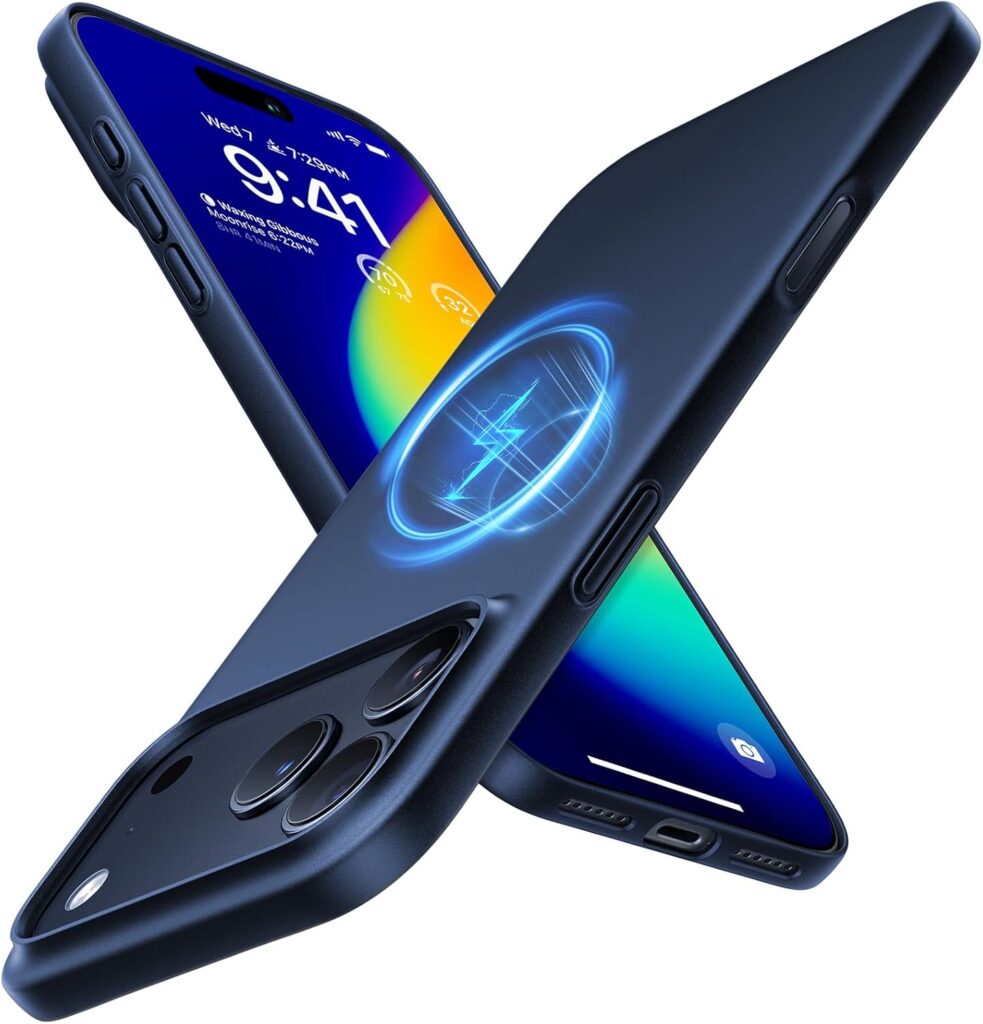
Some people don’t want a case that changes how the phone feels at all. TORRAS built its identity around exactly that use case.
Key Specifications
- Aramid fiber or polycarbonate construction
- Ultra-slim profile
- Integrated magnetic array for MagSafe
- Raised camera lip
What We Like
- One of the thinnest cases that still maintains real MagSafe strength
- Aramid fiber versions have a premium, textured feel without added bulk
- Doesn’t mask the phone’s original shape and weight balance
What We Don’t Like
- Less forgiving on hard, high-impact drops than thicker cases
- Slim profile means less to grip onto for people with sweaty or slippery hands
Why We Chose It
A slim case is a deliberate compromise, and TORRAS handles that compromise better than most. The aramid fiber option in particular punches above its thickness — it’s rigid enough to genuinely add protection rather than just being a cosmetic layer, which is where a lot of “slim” cases fall short.
We’ve noticed thinner cases are often where brands cut corners on MagSafe magnet strength to save internal space. TORRAS is one of the few slim options that hasn’t made that tradeoff, which is exactly why it’s on this list instead of a dozen similar-looking alternatives.
This is the case for someone who wants their phone to still feel like a phone, and who isn’t dropping it multiple times a week.
Best Leather Alternative: Nomad Modern Leather Case
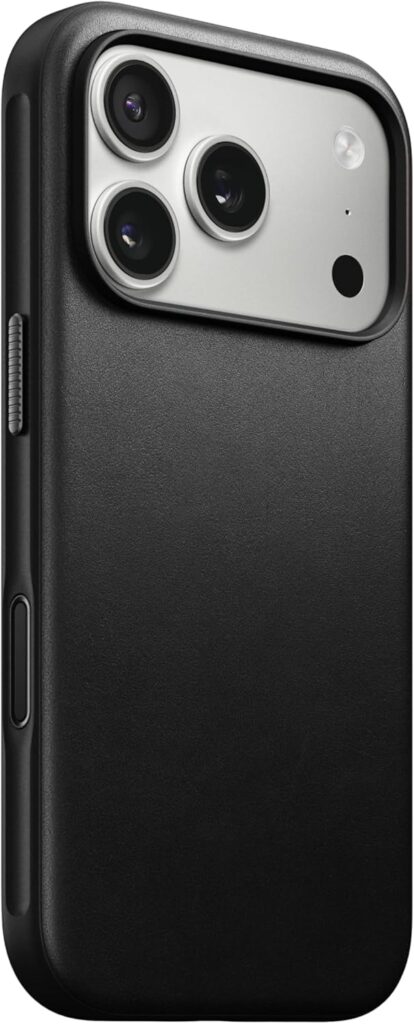
Leather cases have fallen out of favor with a lot of reviewers because cheap versions crack and peel within months. Nomad is one of the few brands that’s kept people’s trust here.
Key Specifications
- Genuine leather exterior over a TPU inner shell
- Reinforced magnet array for MagSafe
- Raised camera and screen bezels
What We Like
- Leather actually improves with age instead of degrading — develops a natural patina rather than cracking
- Feels genuinely premium in hand, unlike a lot of “leather-look” synthetic alternatives
- MagSafe performance holds up well despite the thicker material
What We Don’t Like
- Leather requires a little more care than synthetic materials — it can absorb moisture and stains if neglected
- Premium price point compared to synthetic leather alternatives
Why We Chose It
There’s a real difference between genuine leather that’s properly tanned and treated versus the synthetic “leather-style” cases that dominate the budget end of the market. Nomad has built a reputation over multiple iPhone generations for using actual full-grain leather that ages the way good leather goods are supposed to — it gets better-looking with wear, not worse.
This is one of those categories where the material itself does most of the talking. If you’ve ever owned a leather wallet or watch strap that broke in beautifully over time, this is the same idea applied to a phone case. It’s not for everyone, but for the right person, nothing else on this list quite matches the feel.
The Biggest Mistake People Make When Buying an iPhone Case
Most buyers compare three numbers: drop-test height, military certification, and thickness. Those numbers matter, but they’re not the whole story — and honestly, they’re not even the most important part.
After watching this category for years, here’s what experienced buyers actually compare:
- Precision of fit. A case that’s 0.2mm off in tolerance either rattles slightly or fights you every time you try to put it on or take it off. Both are annoying in ways spec sheets never capture.
- MagSafe magnet strength. Some cases pass a “MagSafe compatible” label with magnets that are technically present but weak. Others snap in with real resistance. You can’t tell the difference from a product photo.
- Button responsiveness. Cheap cases use a thin membrane over the buttons that goes mushy within weeks. Good cases use a more rigid cutout or reinforced membrane that keeps a real click for the life of the case.
- Camera lip design. A raised lip that’s too shallow doesn’t protect the lens on a flat drop. Too deep, and it interferes with the camera’s field of view or causes vignetting in photos.
- Long-term yellowing. Clear cases are the worst offenders here. UV exposure and skin oils break down cheap polycarbonate coatings within a few months.
- Grip over time. Some textured grips actually get smoother and more slippery with wear. Others hold their texture for years.
- Microfiber lining quality. A thin, low-quality lining can scratch a phone’s back glass over time from trapped dust and grit. A proper microfiber lining actually protects against that.
Here’s a real example of why this matters more than raw specs: a slimmer, well-engineered case with tight tolerances and a properly designed camera bezel will often protect a phone better in real-world drops than a bulky case with flashy “12-foot drop tested” marketing and sloppy internal design. The drop-test number tells you what happened in a lab, dropped flat, once. It doesn’t tell you what happens when the case has been in your pocket for four months, picking up dust and losing its grip on a rain-slicked sidewalk.
What We’ve Learned After Watching Every New iPhone Launch
Here’s something almost nobody talks about: experienced buyers pick their case before the phone is even released, and they do it without waiting for dozens of individual reviews.
How? They’re not betting on the specific product listing. They’re betting on the brand’s track record.
Before a single review exists for a launch-day case, you can already evaluate:
- Consistency across generations. Has this brand’s iPhone 15, 16, and 17 case lineup held up well, or has quality been a coin flip year to year?
- Manufacturing history. Some brands run tighter tolerances and better QC checks than others, and that shows up generation after generation.
- Fit accuracy at launch. Some brands nail the exact dimensions almost immediately. Others need a running design revision or two before the fit is truly precise — which matters a lot if you’re ordering in the first weeks after release.
- MagSafe implementation history. Has this brand’s magnet design improved release over release, or have they been using the same underpowered magnet ring for years?
- Warranty support. A brand that stands behind a cracked case with an easy replacement tells you something about how confident they are in their own product.
- Customer feedback trends over time. Not just star ratings, but whether complaints repeat across generations (a red flag) or get addressed (a good sign).
This is the actual difference between guessing and making an informed decision on launch day. You’re not evaluating the exact case yet — you’re evaluating whether the company behind it has earned your trust.
How Experienced iPhone Users Actually Choose a Case
New buyers usually ask one question: “Which case is the strongest?”
Experienced buyers ask a completely different set of questions, because the “strongest” case is rarely the right one for their actual life. Think of it like advice from a friend who’s helping you figure out what you actually need:
- Do you use MagSafe every day? If you charge wirelessly, mount your phone in the car, or use MagSafe accessories often, magnet strength should be near the top of your list — not an afterthought.
- Do you carry your phone loose in a pocket or bag? Loose carry means more scuffing and more chances for keys or coins to scratch a clear back.
- Do you actually care about bulk? Be honest with yourself here. A lot of people say they want “maximum protection” and then complain within a week that the case feels too thick.
- Do you frequently drop your phone? If you genuinely do, prioritize rugged protection over aesthetics — no clear or leather case is going to save you the way a dedicated rugged case will.
- Do you want to show off the phone’s actual color and design? If yes, a clear or slim case matters more to you than maximum drop protection.
- Will this case still look good in six months? This is the question almost nobody asks at checkout, and it’s the one that determines whether you’re happy with your purchase in the long run.
A quick story on that last point: after upgrading to a new iPhone a few years ago, we rushed to buy the first highly rated case we could find. On paper it looked perfect — great reviews, reasonable price, MagSafe compatible. But after a few weeks, the buttons became mushy, the clear back started yellowing, and the MagSafe connection felt noticeably weaker than it had on day one. That experience is the reason this entire guide leans so heavily on brand track record and long-term build quality instead of just specs and star ratings.
How to Choose the Best iPhone 18 Pro Case
If you want to build your own decision instead of just picking from our list, here’s what actually matters, in order of real-world impact:
- MagSafe compatibility. Confirm the magnet array is a true MagSafe implementation, not just “wireless charging compatible,” which is a weaker standard.
- Case materials. TPU flexes and absorbs shock well but can degrade faster. Polycarbonate is rigid and scratch-resistant but less shock-absorbing on its own. Leather ages beautifully but needs some care. Aramid fiber offers high strength at low thickness but usually costs more.
- Drop protection. Look past the marketed drop height and check whether the case has raised, structured bezels around the screen and camera specifically.
- Grip. Textured or matte finishes tend to hold their grip longer than glossy finishes, which get slippery with wear.
- Camera lip design. It should be raised enough to prevent the camera from touching a flat surface, without being so deep that it clips into photos.
- Screen protection. A raised front lip (roughly 1mm or more) is the minimum for real screen-down drop protection.
- Button quality. Look for reinforced cutouts or a rigid membrane rather than a thin, generic rubber overlay.
- Weight. More material generally means more protection, but also more strain on pockets and bags over a full day.
- Thickness. There’s a real point of diminishing returns — beyond a certain thickness, you’re adding bulk without meaningfully more protection.
- Wireless charging. Confirm the case doesn’t interfere with charging speed, which can happen with poorly designed metal-reinforced cases.
- Long-term durability. This is where brand track record matters more than any single spec.
- Yellowing resistance. Relevant mainly for clear cases — look for brands with a history of UV-resistant coatings.
- Warranty. A solid warranty is a strong signal that a brand trusts its own manufacturing quality.
- Everyday usability. At the end of the day, the best case is the one you’ll actually keep on your phone instead of taking off because it’s annoying to use.
Recommendations by User Type
- Everyday users: Spigen Ultra Hybrid MagFit — balanced protection, strong MagSafe, no compromises that get annoying day to day.
- Professionals: Nomad Modern Leather Case — looks appropriate in a business setting while still offering real protection.
- Travelers: SUPCASE UB Mag XT — built-in kickstand and maximum protection for a phone that’s getting tossed in bags and pockets constantly.
- Outdoor users: SUPCASE UB Mag XT — the rugged protection matters more than aesthetics when you’re outside the controlled environment of an office or home.
- Minimalists: TORRAS Magnetic Slim Fit — barely changes how the phone feels while still delivering real MagSafe strength.
- Heavy MagSafe users: Mous Limitless 6.0 — some of the strongest, most consistent magnet performance we’ve seen.
- People prone to dropping their phone: SUPCASE UB Mag XT — don’t fight your own habits, buy the case built for them.
- Users who want to show off the phone’s design: ESR Classic Hybrid HaloLock — clear, MagSafe compatible, and reasonably yellowing-resistant.
- Best value buyers: ESR Classic Hybrid HaloLock — strong performance for the price, especially on MagSafe strength.
- Premium buyers: Mous Limitless 6.0 — the materials and engineering genuinely justify the price jump.
Frequently Asked Questions
What is the best iPhone 18 Pro case? For most people, the Spigen Ultra Hybrid MagFit is the best overall choice — it balances protection, MagSafe strength, and price better than any other case on this list. But “best” really depends on your priorities, which is why we’ve broken recommendations down by user type above.
Are MagSafe cases worth it? Yes, especially if you use wireless charging, car mounts, or MagSafe wallets and accessories regularly. The convenience of a strong magnetic connection is hard to go back from once you’re used to it.
What case offers the best drop protection? Based on brand track record and design, the SUPCASE UB Mag XT offers the most dedicated drop protection on this list, followed closely by the Mous Limitless 6.0.
Which clear case yellows the least? Historically, ESR has had one of the better track records among budget-friendly clear case brands when it comes to UV-resistant coatings, which is why the Classic Hybrid HaloLock is our clear case pick.
Is a rugged case necessary? Only if you actually drop your phone often or work/play in environments where impacts are common. If you’re generally careful with your phone, a slimmer hybrid case is usually enough protection without the added bulk.
Do thicker cases protect better? Not automatically. A thick case with poorly designed internal structure can perform worse than a well-engineered slim case. Thickness helps, but design quality matters more.
Which case has the strongest magnets? Based on past generations, Mous and Spigen’s MagFit-branded cases have consistently had some of the strongest, most well-aligned MagSafe magnet arrays in their respective price ranges.
Are leather cases still worth buying? Yes, if you buy from a brand that uses genuine, properly treated leather. Cheap synthetic “leather-style” cases tend to crack and peel within months, but genuine leather from a brand like Nomad tends to improve with age instead of degrading.
Which case would we personally buy? The Spigen Ultra Hybrid MagFit, without much hesitation. It’s the case that gets the most things right for the widest range of people, without asking you to give up something important in exchange.