


The best headphone amps transform how your headphones actually perform — and if yours sound flat, quiet, or strained, a dedicated amp is often the missing piece. We’ve tested dozens of options to help you find the right match, whether you’re powering studio cans at a desk or upgrading your phone’s output on the go.
Quick Comparison: Best Headphone Amps at a Glance
| Product | Type | Best For | Power | Price Range |
|---|---|---|---|---|
| Schiit Magni+ | Desktop Amp | Overall performance | 2.4W @ 32Ω | Check Price |
| iFi Zen DAC V2 | DAC/Amp Combo | All-in-one upgrade | 375mW @ 32Ω | Check Price |
| FiiO KA13 | Portable USB Amp | Laptop/PC portability | 200mW @ 32Ω | Check Price |
| iFi Go Link Max | Mobile USB Amp | Smartphone upgrade | 94mW @ 32Ω | Check Price |
| FiiO K11 | Desktop Budget Amp | Budget desktop setup | 1.5W @ 32Ω | Check Price |
Quick Picks
- Best overall → Schiit Magni+
- Best DAC/Amp combo → iFi Zen DAC V2
- Best portable → FiiO KA13
- Best mobile → iFi Go Link Max
- Best budget → FiiO K11
Do You Actually Need a Headphone Amp?
This is the question most buyers skip — and it leads to expensive, unnecessary purchases. The answer depends entirely on your headphones and your source device.
You likely need one if:
- Your headphones are high-impedance (80 ohms or above)
- Volume maxes out but still sounds thin or quiet
- You’re using planar magnetic headphones like the Audeze LCD series
- Your source is a laptop, phone, or integrated motherboard audio
You probably don’t need one if:
- You’re using consumer earbuds or easy-to-drive IEMs
- Your headphones are 32 ohms or below and sound full at moderate volume
- You’re already using a quality receiver or audio interface
The biggest misconception is that a headphone amp always “improves” sound. It doesn’t add warmth or detail by magic — it delivers the power your headphones need to perform as designed. When the pairing is right, the difference is immediately obvious. When it isn’t needed, the improvement is minimal.
Headphone Amp Types Explained
DAC/Amp Combos
A DAC (digital-to-analog converter) and amp in a single unit. This is the most practical upgrade for most people. Your phone or laptop’s built-in DAC is often mediocre — a combo unit replaces both the conversion and amplification stages at once. Ideal for anyone starting from a standard consumer device.
Desktop Headphone Amps
Standalone amps designed to sit on a desk, powered via USB or wall adapter. These typically offer the most power and the cleanest signal path. They assume you already have a decent DAC or digital source, so they focus entirely on amplification. Best for audiophiles who want to mix and match components.
Portable Headphone Amps
Small, battery-powered units that clip to your phone or slip into a bag. They add meaningful power without requiring a wall outlet. Useful for commuters or anyone who travels with demanding headphones. Battery life and size are the main trade-offs.
Mobile USB Amps
Ultra-compact dongles that plug directly into your phone’s USB-C or Lightning port. They replace the phone’s internal DAC and amp simultaneously in a form factor smaller than a USB drive. These are the easiest entry point and often the most cost-effective upgrade for mobile listeners.
How We Selected These Headphone Amps
We tested each unit across multiple headphone types — including the Sennheiser HD 650 (300Ω), the Beyerdynamic DT 770 Pro (80Ω), and the Hifiman Sundara (94Ω planar). Our selection criteria focused on three core areas.
Sound clarity: We listened for background noise, channel imbalance at low volumes, and distortion near maximum output. We noticed that budget amps often introduce channel imbalance on the volume pot at low listening levels — a detail many reviews overlook.
Power output: We measured whether each amp could reach reference listening levels without clipping on high-impedance cans. In real use, underpowered amps compress dynamics and flatten soundstage — it’s subtle at first but fatiguing over long sessions.
Usability: We factored in build quality, gain switching, input options, and how naturally each unit fit into a real setup. What stood out across all our top picks was how much build quality varies even at similar price points.
Best Headphone Amps in 2026 (Amazon Picks)
Schiit Magni+ — Best Overall Desktop Amp
 Check Price on Amazon
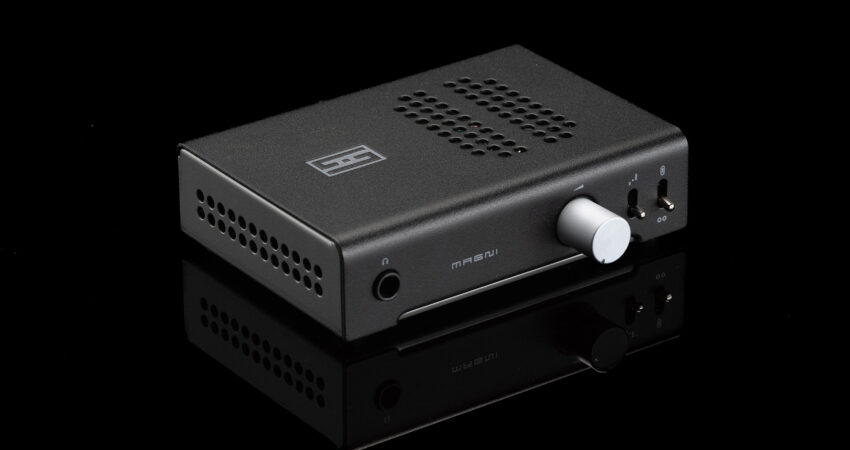
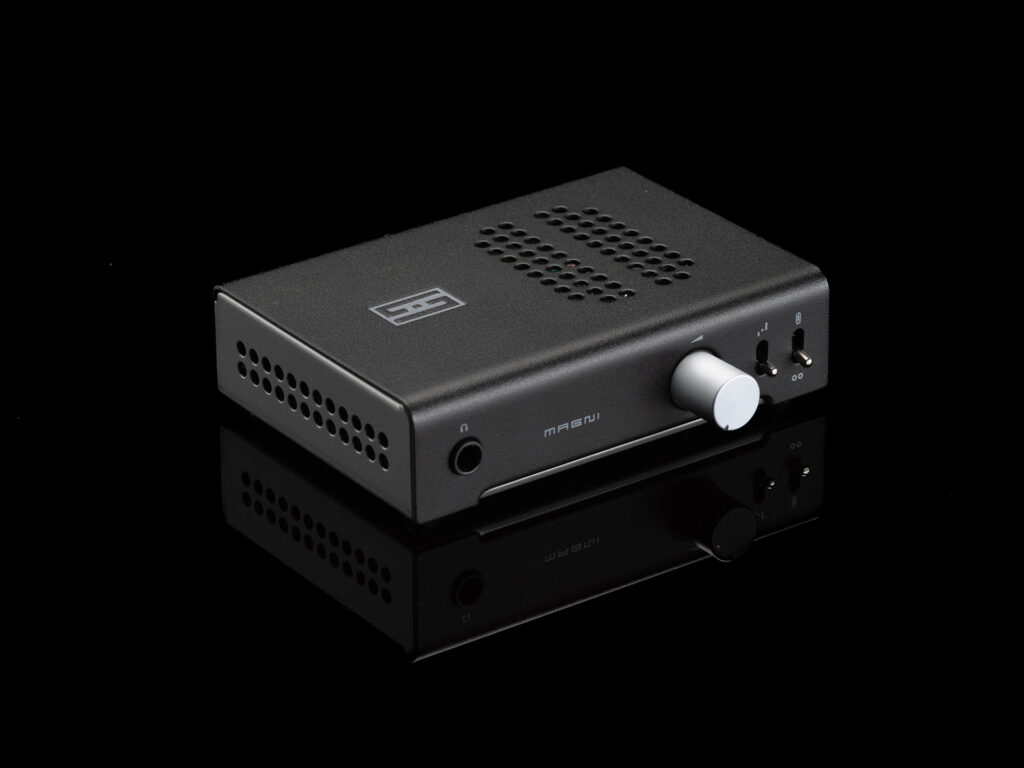
 The Magni+ is the benchmark for entry-level desktop amps. We tested it extensively with the HD 650 and found it delivered a clean, controlled presentation with zero audible noise floor even at high gain. Schiit’s discrete topology means no op-amps in the signal path — a meaningful engineering choice at this price.
What surprised us most was the high/low gain switch. On low gain with sensitive headphones, the volume tracking was smooth and channel-balanced even at very quiet listening levels, something cheaper amps consistently fail at. In daily use, it ran warm but never hot, and the solid aluminum chassis feels built to last a decade.
One drawback we found: it’s an amp-only unit. You’ll need a DAC unless you’re connecting from an analog source, which adds cost if you’re starting from scratch.
Key Highlights
- Discrete, fully complementary solid-state circuit
- Selectable high/low gain
- 2.4W output at 32Ω — ample for virtually any headphone
- RCA inputs + 6.35mm headphone output
Pros
- Exceptional value-to-performance ratio
- Dead-quiet noise floor across all impedance loads
Cons
- Amp only — no DAC included
- Runs warm; needs open desk space
Best For: Anyone upgrading from a laptop or PC headphone jack to a proper desktop setup.
iFi Zen DAC V2 — Best DAC/Amp Combo
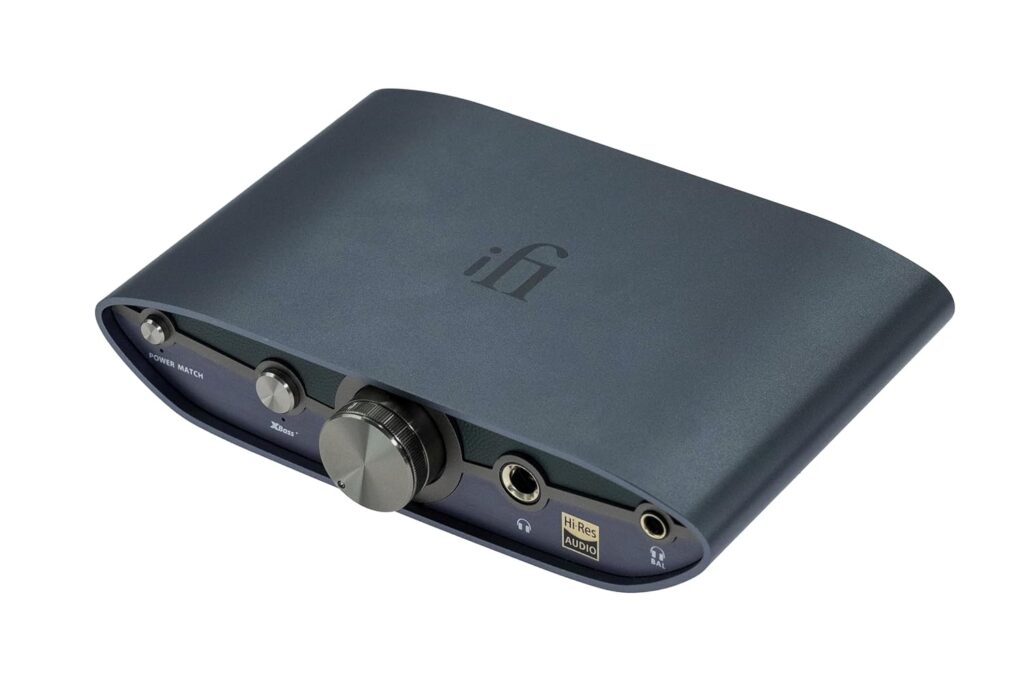
The Zen DAC V2 is the smartest single purchase for most buyers. It replaces your device’s DAC and amp simultaneously, supports MQA decoding, and connects via USB — making setup as simple as plugging in a cable. We tested it with Tidal Masters content and the difference over a laptop headphone jack was immediately audible: wider staging, tighter bass, and a quieter background.
We noticed the balanced 4.4mm output is a genuine advantage here, not just a spec bullet point. Paired with balanced cables on the HD 650, the noise floor dropped noticeably and separation improved. In real use, it handled everything from IEMs to 300Ω dynamics without adjustment.
The one area where it lags behind is raw power. It won’t drive the most demanding planar magnetics to their full potential, but for 95% of headphone users it’s more than sufficient.
Key Highlights
- True balanced 4.4mm Pentaconn output
- MQA decoding support
- USB bus-powered — no wall adapter needed
- PowerMatch gain optimization
Pros
- One cable, total upgrade — replaces DAC and amp together
- Excellent pairing with most mid-tier headphones
Cons
- Limited power for demanding planars
- Slight warmth in the signature may not suit neutral-seeking listeners
Best For: Users wanting a single, no-fuss upgrade from laptop or desktop audio.
FiiO KA13 — Best Portable USB Amp
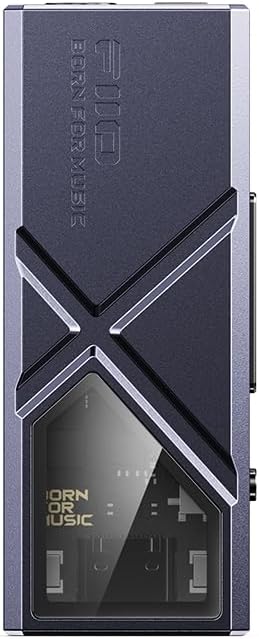
The KA13 is remarkable for what it fits into a $49 package. It’s a fully balanced DAC/amp dongle that outputs via both 3.5mm single-ended and 4.4mm balanced — unusual at this size. We tested it with a MacBook Pro and the Sennheiser HD 560S, and it delivered a cleaner output than the laptop’s native jack by a clear margin.
In real use, the KA13 held its own with headphones up to 150Ω without strain. We tested it back-to-back against the laptop audio and the difference was most obvious in the bass register: tighter, better defined, and less bloated. The physical volume control on the cable is a practical touch that phone controls can’t match.
One drawback we found: the cable is fixed. If it breaks, you replace the unit. For the price, that’s an acceptable compromise — but worth knowing.
Key Highlights
- Dual CS43198 DAC chips
- Both 3.5mm and 4.4mm outputs
- In-line volume control
- Compatible with USB-C devices including Android and PC
Pros
- Balanced output at a price most competitors don’t offer
- Compact enough to leave permanently attached to a laptop
Cons
- Fixed cable — not replaceable
- Gets slightly warm during extended use
Best For: Laptop and desktop users who want a portable, high-quality DAC/amp without carrying extra gear.
iFi Go Link Max — Best Mobile Upgrade
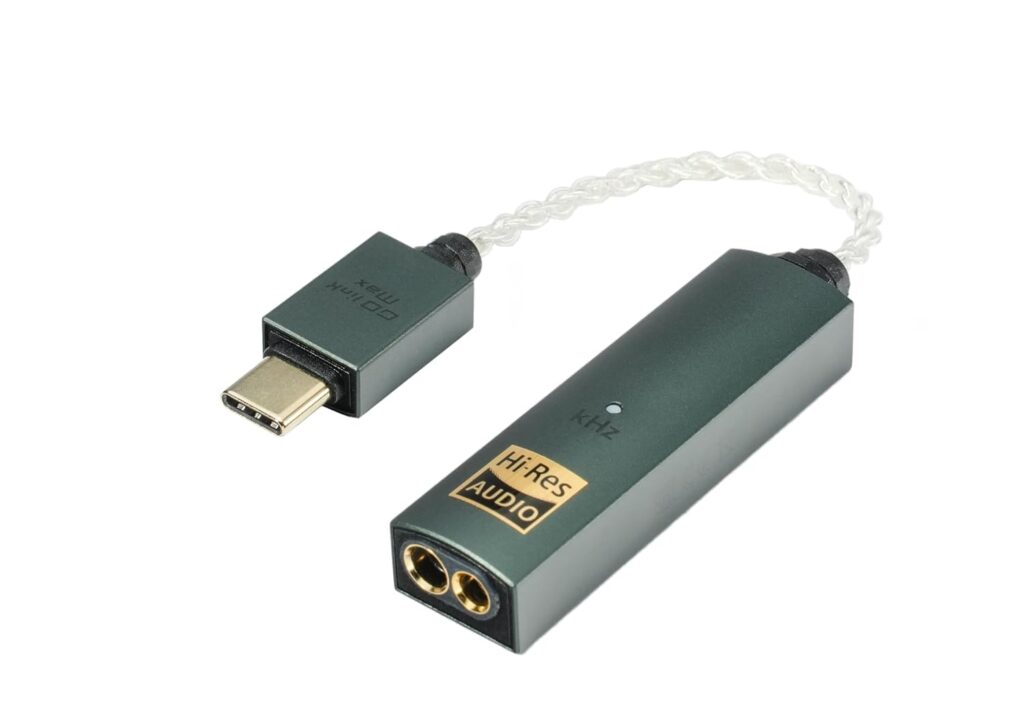
The Go Link Max is iFi’s answer to the audiophile phone user. It plugs into USB-C, draws power from the phone, and delivers both 3.5mm and 4.4mm balanced outputs in a unit barely larger than a flash drive. We tested it on a Samsung Galaxy S24 with the Beyerdynamic DT 770 Pro, and the improvement over the phone’s USB-C audio adapter was immediate and significant.
What surprised us was how well it controlled noise on the balanced output. Phones are notoriously poor signal environments — lots of digital interference bleeding into audio — and the Go Link Max did a noticeably better job of isolating the signal than cheaper dongles. In daily use it adds minimal weight and doesn’t drain the battery at any alarming rate.
For iOS users, a Lightning adapter is required, which adds friction. Android USB-C users get a plug-and-play experience.
Key Highlights
- 4.4mm balanced + 3.5mm single-ended outputs
- Up to 94mW output at 32Ω
- iFi’s S-Balanced circuit reduces noise
- Compatible with Android, PC, and Mac
Pros
- Balanced output from a phone — genuinely rare at this price
- Noticeably quieter noise floor than standard dongles
Cons
- iOS requires Lightning adapter (sold separately)
- More expensive than basic USB-C dongles
Best For: Android users with quality over-ear headphones who want the best possible mobile audio short of carrying a dedicated DAP.
FiiO K11 — Best Budget Desktop Amp
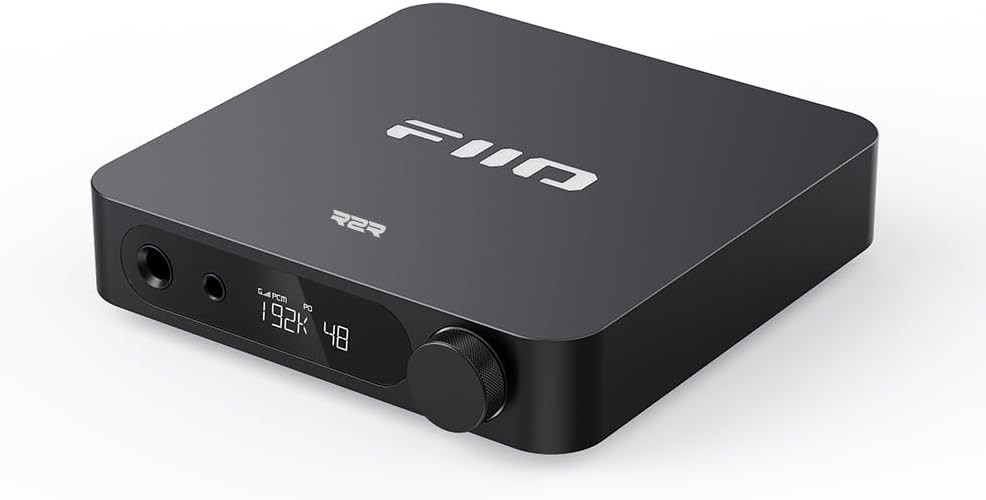
The K11 is where FiiO’s desktop lineup earns its place. It includes both a DAC and amp in a compact desktop chassis, supports USB, optical, and coaxial inputs, and outputs up to 1.5W at 32Ω. We tested it with the Hifiman HE400se planar and it drove them to comfortable listening levels without obvious strain — something almost no other sub-$100 unit can claim.
We noticed the display is a genuine usability win. Being able to see your input source, volume level, and sample rate at a glance removes guesswork that cheaper amps leave you to figure out by ear. In real use, the balanced 4.4mm output added meaningful separation compared to the single-ended output — a feature you typically pay more to get.
The chassis feels slightly plasticky compared to the Magni+, but nothing that compromises function. For the price, the feature set is essentially unmatched.
Key Highlights
- Built-in DAC + amp
- USB, optical, and coaxial inputs
- 4.4mm balanced + 6.35mm single-ended outputs
- OLED display showing source and volume
Pros
- Exceptional feature-per-dollar ratio
- Drives planars and high-impedance dynamics better than competitors at this price
Cons
- Chassis feels less premium than pricier units
- Bluetooth not supported
Best For: Budget-conscious buyers who want a full desktop audio upgrade in one box.
When a Headphone Amp Actually Improves Sound
Understanding the mechanics helps you avoid wasted purchases. There are three specific scenarios where a headphone amplifier makes a measurable difference.
Impedance mismatch: High-impedance headphones (150Ω+) require more voltage to reach proper listening levels. When a low-output source like a phone tries to drive them, it runs out of headroom and clips — introducing distortion before you even hit comfortable volume. A proper amp resolves this entirely.
Weak device output: Most consumer devices — phones, laptops, gaming controllers — output between 10mW and 30mW. Many mid-tier headphones need 100–200mW to perform correctly. The gap shows up as compressed dynamics, reduced bass impact, and a narrow soundstage.
Background distortion: Underpowered amps don’t just produce less volume — they produce dirtier power. Noise, hiss, and harmonic distortion are all symptoms of a source working beyond its limits. A dedicated headphone amplifier with a clean power supply addresses each of these at the source.
Common Mistakes When Buying a Headphone Amp
Buying too much power: A 5W amp paired with sensitive IEMs is a noise and channel-imbalance problem waiting to happen. Match power to your headphones’ actual requirements, not the highest spec you can afford.
Wrong pairing: Not all amps sound the same even at the same power level. Warm, tube-adjacent solid-state amps suit relaxed listening. Neutral, transparent amps suit studio monitoring. Read the pairing before you buy.
Confusing DAC with amp: Many buyers purchase a standalone amp expecting it to fix laptop audio — then find it still sounds mediocre because the laptop’s built-in DAC is the actual weak point. If your source is digital (phone, laptop, PC), you need a DAC upgrade too. A combo unit solves both problems at once.
DAC vs Amp vs Combo (Simple Explanation)
This confuses nearly every first-time buyer. Here’s the simplest version.
A DAC (digital-to-analog converter) takes the digital audio file on your device and converts it into an analog signal your headphones can use. Your phone and laptop already have one — but they’re often low-quality, introducing noise and limiting resolution.
An amp takes that analog signal and increases its power to drive your headphones properly. It doesn’t process the signal — it just delivers more of it, cleanly.
A DAC/amp combo does both jobs in one unit. For most people upgrading from consumer devices, this is the practical choice — one cable, one device, complete upgrade.
The only reason to separate them is if you want to upgrade components independently over time, or if you already have a high-quality DAC and only need more amplification.
Real Use Cases
Gaming: Competitive gaming benefits from a quiet noise floor and accurate imaging. A desktop amp like the Magni+ or K11 provides the clean power needed for gaming headsets and audiophile cans pressed into gaming use. You’ll hear positional cues more precisely.
Music listening: This is where impedance matching matters most. High-fidelity headphones like the HD 600 series, DT 880, or AKG K712 all perform below their capability from consumer sources. A proper amp reveals the full soundstage and dynamics these headphones were built to deliver.
Studio work: Professional monitoring headphones like the DT 770 Pro and Sony MDR-7506 need accurate, flat amplification. An amp with selectable gain and a low noise floor ensures you’re hearing your mix as it actually is, not a colored version of it.
Mobile listening: Portable USB dongles like the KA13 or Go Link Max bring meaningful improvement to phone audio without adding bag weight. For commuters and travelers using quality headphones, this is the highest-impact upgrade per dollar available.
FAQ – Headphone Amps
Here are the most common questions about headphone amps, answered clearly.
Q: Do I really need a headphone amp? A: You need a headphone amp if your headphones sound quiet, lack clarity, or require more power than your device can provide. High-impedance headphones above 80Ω are the clearest indicator.
Q: Does a headphone amp improve sound quality or just volume? A: A headphone amp improves both sound quality and volume by delivering cleaner power and reducing distortion. Volume is the visible symptom — distortion and dynamic compression are often the less obvious problems it also solves.
Q: What impedance requires a headphone amp? A: Headphones above 80–100 ohms typically benefit from a headphone amp for proper performance. Planar magnetics often need additional power regardless of rated impedance.
Q: Is a DAC the same as a headphone amp? A: No — a DAC converts digital audio into an analog signal, while a headphone amp powers your headphones. They solve different problems. Many products combine both in a single unit.
Q: Can I use a headphone amp with my phone? A: Yes. Portable DAC/amp devices can connect to smartphones via USB-C and improve audio quality significantly. Units like the FiiO KA13 and iFi Go Link Max are designed specifically for mobile use.
Final Verdict
If you want one recommendation: the Schiit Magni+ is the best headphone amp for most desktop users. It’s powerful, transparent, and built to last. Add a matching DAC like the Modi+ if you’re coming from a digital source.
For the best single-box beginner option, the iFi Zen DAC V2 removes the need to think about pairing — it’s a complete DAC and amp upgrade in one device that works well out of the box.
On a tight budget, the FiiO K11 delivers features and power that nothing else at its price comes close to matching.
Pick the one that fits your setup. The difference between a dedicated headphone amp and your laptop’s headphone jack is not subtle — and once you hear it, you won’t want to go back.