


A single Reddit search query exposed the problem. By July 25, 2026, a routine share feature in Claude had quietly turned into a large-scale data exposure, and tech reporters are now calling it a serious privacy lapse at Anthropic. It isn’t the first time this has happened to a chatbot maker, either.
A missing tag, thousands of chats exposed
Millions of people click “Share” on Claude every day. Usually it’s just to send a conversation to a coworker, and the app generates a link to a frozen snapshot of that exchange, artifacts included. A private-looking URL, built for a small circle of eyes — nothing alarming on paper.
No login was required on the Free, Pro, or Max tiers, though. Whoever held the link could read the full exchange. These pages also carried no HTML tag or HTTP header warning crawlers off; Anthropic leaned on a plain robots.txt file instead. Crawlers tend to ignore that file once an outside site links straight to a page, and that’s exactly what happened.
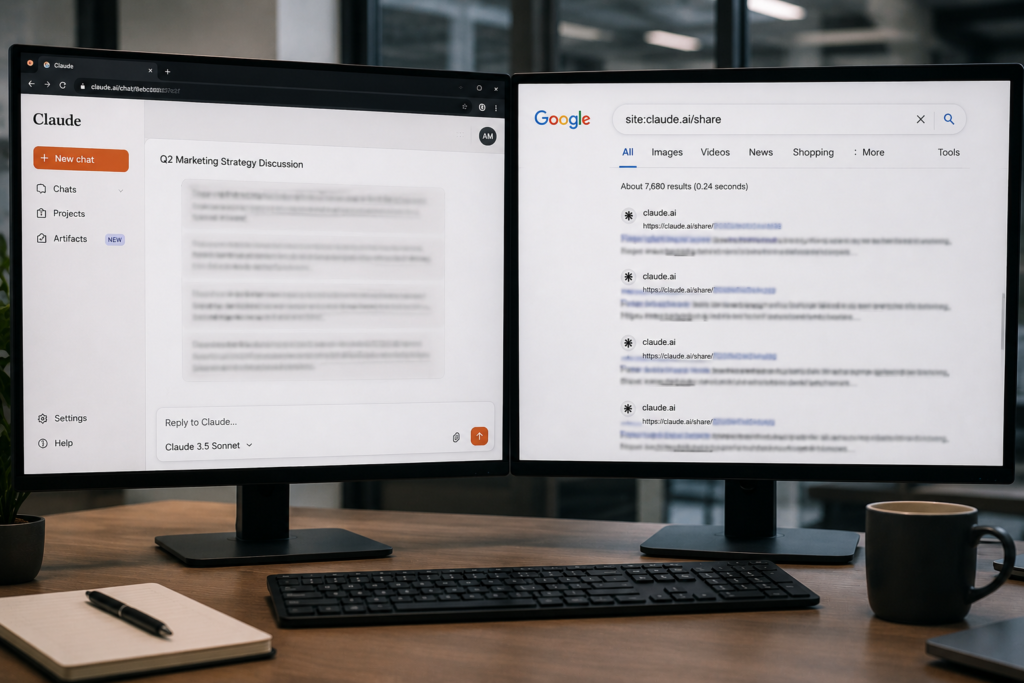
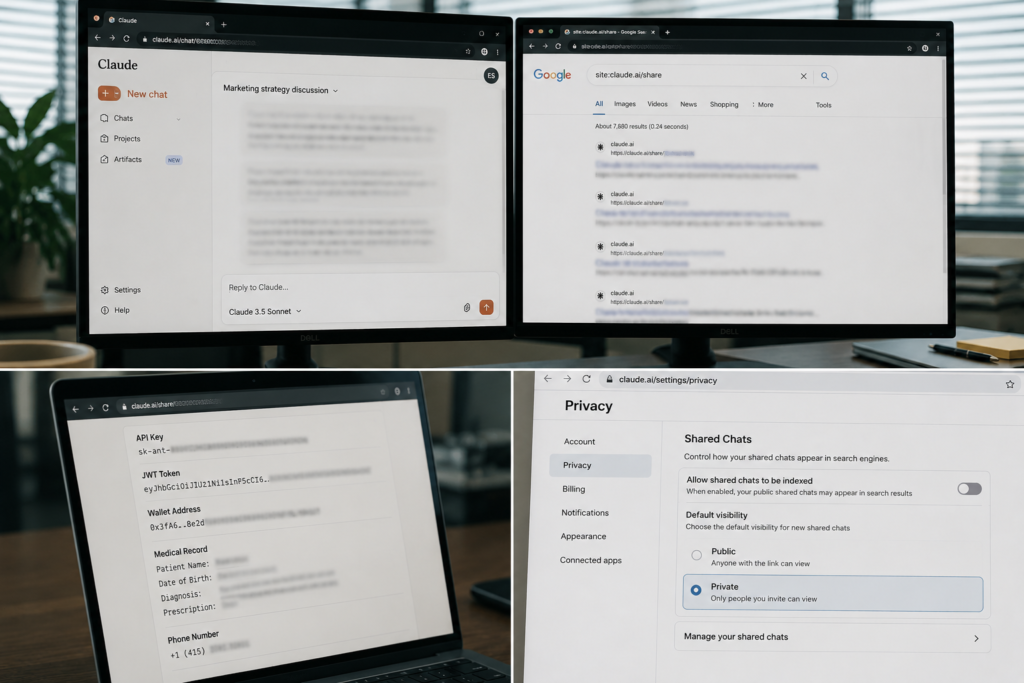
Once a Claude link landed on a forum, or turned up in an X post, Google treated it like any other public webpage and indexed it. Running “site:claude.ai/share” was enough for one Reddit user to pull back an endless list of conversations nobody meant to publish.
What was sitting out in the open
The inventory is unsettling. Legal notes, login credentials, medical exchanges, financial models — all stored in plain text and searchable by anyone. TechCrunch dug deepest into the exposed chats, turning up medical records alongside confidential corporate files; children’s names and phone numbers showed up too.
Meeting notes joined the pile at other outlets, along with experimental apps built inside Claude. Text wasn’t the only casualty. Artifacts, Claude’s feature for generating small interactive apps, got swept up as well, and several X users spotted internal company dashboards sitting exposed — some naming actual clients.
A stranger mix turned up in Fortune’s dig through the indexed content: coding sessions next to erotica, fake book reviews beside work notes. One conversation, tagged as “shared by Anthropic,” reportedly showed Claude producing explicit material, which runs against the company’s own policy.
Damage control, no admission of fault
Anthropic moved fast once the backlash hit. It stopped short of owning a design flaw, though. The company gives users control over public sharing, it told Fortune, and per its privacy principles it doesn’t hand directories or sitemaps to search engines. These links, Anthropic maintained, can’t be guessed or found unless a user chooses to share them.
Blame, in other words, lands on whoever posted a link to an open forum or social platform. A spokesperson quoted by Hackread pinned the visibility issue on users posting links where search engines could find them — fair enough, technically, but it dodges the real point. A single noindex tag would have closed this hole.
Cleanup moved quickly, at least. Most links vanished from Google’s results by Sunday, whereas Bing and Brave Search kept traces around much longer. Pulling a page from search results doesn’t touch what’s sitting on the server, though, and anyone who saved the link beforehand can still open it until Anthropic disables it directly.
Not the industry’s first time
Forbes reported back in September 2025 that Google had already indexed close to 600 Claude conversations under nearly identical circumstances. TechCrunch later confirmed that figure.
OpenAI ran into almost the same mess in August 2025, when Google began indexing thousands of shared ChatGPT conversations. That episode went further: 404 Media reported a researcher pulling roughly 100,000 public ChatGPT conversations. Same blind spot both times — a share button that looks convenient until crawlers turn out never to have been fenced off.
Artifacts set the Claude incident apart. A plain text conversation is just text, whereas an Artifact can be a working dashboard wired to real data, or a prototype with credentials hardcoded right into it.
What to do right now
Fixing this takes about two minutes for anyone who’s ever clicked “Share” on Claude. Go to Settings → Privacy → Shared Chats, check which conversations are still public, then flip anything unnecessary back to “Private” — the link dies immediately.
Killing the link doesn’t undo exposure if sensitive material was already in it, though. A page pulled from search results could easily have been copied or archived before cleanup even started. Revoking the link comes first; changing any password or API key that passed through a shared conversation matters more.