




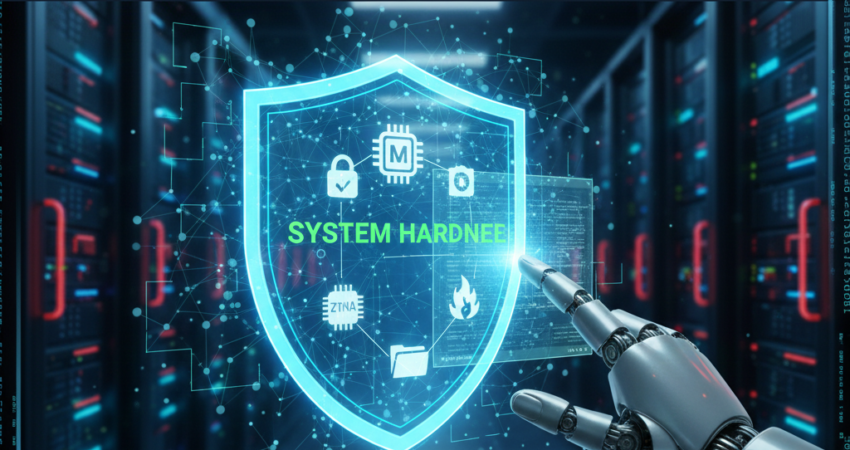
OpenClaw Docker: Defense in Depth for AI Agent Isolation in 2026
Openclaw docker environments require specialized hardening protocols in 2026 to prevent autonomous agents from escaping their isolation boundaries. Specifically, the naive assumption that “a container is a sandbox” has collapsed entirely this year. Consequently, the late January 2026 discovery of the Control UI WebSocket Remote Code Execution vulnerability — catalogued as CVE-2026-25253 on NVD — demonstrated that an unauthenticated attacker could achieve host-level code execution through an unpatched openclaw docker deployment in under 90 seconds.
Furthermore, the February 2026 breaking change that removed auth: none from the OpenClaw gateway configuration ended an era of implicit trust. Consequently, every openclaw docker deployment that has not yet migrated to version 2026.1.29 or later is actively vulnerable. Therefore, this guide functions as a hardening manual — not a getting-started tutorial. In addition, see our [OpenClaw Add Agent: Secure IAM] guide for identity-layer controls that complement the container-level hardening covered here. Moreover, consult the GitHub openclaw/openclaw repository for the official patch notes.
Phase 1: Patching and Identity Hardening for OpenClaw Docker
Verifying Your OpenClaw Docker Image Version
The first and non-negotiable step is confirming you run the patched baseline. Specifically, version 2026.1.29 closes the WebSocket endpoint that CVE-2026-25253 exploited. Furthermore, any image tagged latest before January 29, 2026 carries this critical RCE vector.
bash
# Verify your current openclaw docker image version
docker inspect openclaw/openclaw:latest \
  --format '{{index .Config.Labels "org.opencontainers.image.version"}}'

# Specifically, pull the mandatory patched baseline
docker pull openclaw/openclaw:2026.1.29

# Furthermore, verify the image digest against the official checksum
docker inspect openclaw/openclaw:2026.1.29 \
  --format '{{.RepoDigests}}'
# Expected: sha256:a7f3b2... (verify against GitHub release page)

# Consequently, tag it as your production baseline
docker tag openclaw/openclaw:2026.1.29 openclaw/openclaw:prod-hardened
Specifically, pin your image digest — not just the tag — in all production docker-compose.yml files. Furthermore, floating tags like latest are a supply-chain risk vector. Consequently, a compromised registry push could silently downgrade your runtime. In addition, use Snyk AI-SPM to continuously scan your openclaw docker images for newly disclosed CVEs post-deployment.
Rotating Leaked Gateway Tokens
The removal of auth: none means every openclaw docker deployment now requires an explicit OPENCLAW_GATEWAY_PASSWORD. Consequently, any deployment that previously used the auth: none shortcut exposed its WebSocket endpoint to unauthenticated access. Furthermore, treat all tokens issued before February 2026 as compromised — rotate them immediately.
bash
# Generate a cryptographically strong gateway password
OPENCLAW_GATEWAY_PASSWORD=$(openssl rand -base64 48 | tr -d '/+=' | head -c 64)
echo "New Gateway Token: $OPENCLAW_GATEWAY_PASSWORD"

# Specifically, store it in a secrets manager — never in plain .env files
aws secretsmanager put-secret-value \
  --secret-id "prod/openclaw/gateway-password" \
  --secret-string "$OPENCLAW_GATEWAY_PASSWORD"

# Furthermore, inject it at runtime — never bake into the Docker image
docker run \
  --env OPENCLAW_GATEWAY_PASSWORD="$(aws secretsmanager get-secret-value \
    --secret-id prod/openclaw/gateway-password \
    --query SecretString --output text)" \
  openclaw/openclaw:prod-hardened
Consequently, token rotation should occur on a 30-day schedule enforced by your secrets management platform. Furthermore, consult Anthropic’s Security documentation for NHI credential lifecycle best practices that translate directly to openclaw docker token governance. In addition, reference Cisco Threat Intelligence for threat actor TTPs that specifically target exposed AI agent WebSocket endpoints.
Phase 2: Filesystem Sandboxing for OpenClaw Docker
Configuring Workspace-Only Filesystem Access
The tools.fs.workspaceOnly: true flag is the most important filesystem control in your openclaw docker configuration. Specifically, without it, agents operating under a compromised prompt can traverse the container’s full filesystem. Consequently, they can read environment variables, mounted secrets, and application source code that should remain invisible.
yaml
# openclaw-config.yaml — Filesystem sandbox configuration
tools:
  fs:
    workspaceOnly: true               # Specifically, restrict all file ops to workspace
    allowedPaths:
      - "/workspace"                  # Furthermore, only this directory is accessible
    deniedPatterns:
      - "**/.ssh/**"
      - "**/.aws/**"
      - "**/secrets/**"
      - "**/.env*"
      - "**/node_modules/.bin/**"     # Consequently, blocks binary execution
    maxFileSizeBytes: 10485760        # 10MB — prevents large exfiltration
    auditAllAccess: true              # Furthermore, log every file operation
bash
# Launch openclaw docker with read-only root filesystem
docker run \
  --read-only \
  --tmpfs /tmp:size=256m,mode=1777 \
  --tmpfs /var/run:size=10m \
  --mount type=bind,source=/srv/openclaw/workspace,target=/workspace \
  --mount type=bind,source=/srv/openclaw/config,target=/config,readonly \
  --env OPENCLAW_CONFIG_PATH="/config/openclaw-config.yaml" \
  --user 1001:1001 \                  # Specifically, non-root execution
  openclaw/openclaw:prod-hardened
Specifically, the --read-only flag makes the entire container root filesystem immutable. Furthermore, only the explicitly mounted /workspace bind mount accepts writes. Consequently, even if an agent achieves code execution within the container, it cannot modify binaries, install backdoors, or write to system directories. In addition, consult Docker Security documentation for seccomp profile configuration that further restricts syscall access. For protecting SSH keys specifically, see the FAQ section below.
Elevating to MicroVM Isolation for Untrusted Code
Standard Docker namespacing is insufficient for executing untrusted agent-generated code. Specifically, shared kernel namespaces mean a kernel exploit bypasses all container boundaries simultaneously. Consequently, for any openclaw docker deployment that executes agent-written code, migrate to MicroVM-based runtimes.
bash
# Option 1: gVisor — kernel interception for openclaw docker workloads
# Install runsc (gVisor runtime)
curl -fsSL https://storage.googleapis.com/gvisor/releases/release/latest/x86_64/runsc \
  -o /usr/local/bin/runsc && chmod +x /usr/local/bin/runsc

# Configure Docker to use gVisor runtime
sudo tee /etc/docker/daemon.json <<EOF
{
  "runtimes": {
    "runsc": {
      "path": "/usr/local/bin/runsc"
    }
  }
}
EOF

sudo systemctl restart docker

# Consequently, run openclaw docker under gVisor runtime
docker run --runtime=runsc openclaw/openclaw:prod-hardened

# Option 2: Firecracker MicroVM via Kata Containers
# Furthermore, use Kata for the strongest isolation boundary
sudo apt install -y kata-runtime
docker run --runtime=kata-runtime openclaw/openclaw:prod-hardened
Specifically, Firecracker on GitHub provides sub-125ms MicroVM boot times — acceptable for agent sandboxing. Furthermore, each Firecracker MicroVM gets its own dedicated kernel, making cross-agent kernel exploits structurally impossible. Consequently, this architecture directly mitigates the class of vulnerability that CVE-2026-25253 represents. Moreover, consult OWASP LLM Top 10 risk LLM08 (Excessive Agency) for the threat model that mandates this isolation level.
Phase 3: Network Isolation for OpenClaw Docker
Implementing Egress Filtering and Disabling mDNS
The openclaw docker network stack requires explicit egress controls. Specifically, an agent without egress filtering can exfiltrate data to arbitrary external hosts. Furthermore, mDNS discovery within the Docker network allows agents to enumerate other services on the same bridge network — a “Shadow AI” lateral movement vector.
yaml
# docker-compose.yml — Hardened openclaw docker network configuration
version: "3.9"

services:
  openclaw:
    image: openclaw/openclaw:prod-hardened
    runtime: runsc                    # Furthermore, gVisor isolation
    read_only: true
    user: "1001:1001"
    networks:
      - openclaw-isolated
    environment:
      - OPENCLAW_GATEWAY_PASSWORD_FILE=/run/secrets/gateway_password
      - OPENCLAW_DISABLE_MDNS=true    # Specifically, kill mDNS discovery
      - OPENCLAW_EGRESS_ALLOWLIST=api.minimax.chat,api.anthropic.com
    secrets:
      - gateway_password
    tmpfs:
      - /tmp:size=256m
    deploy:
      resources:
        limits:
          cpus: "2.0"
          memory: 4G
        reservations:
          memory: 512M

  # Egress proxy — all agent traffic routes through this
  egress-proxy:
    image: squid:6-alpine
    networks:
      - openclaw-isolated
      - external-egress
    volumes:
      - ./squid.conf:/etc/squid/squid.conf:ro

networks:
  openclaw-isolated:
    driver: bridge
    internal: true                    # Consequently, no direct internet access
    driver_opts:
      com.docker.network.bridge.name: "br-openclaw"
    ipam:
      config:
        - subnet: 172.28.0.0/24

  external-egress:
    driver: bridge                    # Furthermore, only egress proxy has internet access

secrets:
  gateway_password:
    external: true
bash
# Apply iptables egress filtering rules to the openclaw docker bridge
# Specifically, block all egress except through the proxy
BRIDGE_IF="br-openclaw"

# Drop all forwarded traffic from openclaw network by default
sudo iptables -I FORWARD -i $BRIDGE_IF -j DROP

# Furthermore, allow only proxy-destined traffic
sudo iptables -I FORWARD -i $BRIDGE_IF -d 172.28.0.2 -p tcp --dport 3128 -j ACCEPT

# Consequently, log all blocked egress attempts for audit
sudo iptables -I FORWARD -i $BRIDGE_IF -j LOG --log-prefix "OPENCLAW-EGRESS-BLOCKED: "
Specifically, the internal: true Docker network flag prevents any container on that network from routing directly to the internet. Furthermore, all agent traffic must traverse the Squid egress proxy, which enforces your allowlist of permitted API endpoints. Consequently, even a fully compromised agent cannot exfiltrate data to an attacker-controlled server. In addition, consult Google Cloud Security Blog for egress filtering patterns adapted to containerized AI workloads.
Zero Trust Networking with Tailscale
Exposing the OpenClaw gateway on a public port is no longer acceptable in 2026. Specifically, Tailscale’s WireGuard-based overlay network eliminates all public port exposure for your openclaw docker deployment. Furthermore, only authenticated Tailscale nodes can reach the gateway — regardless of network segment.
bash
# Run Tailscale as a sidecar in your openclaw docker stack
docker run -d \
  --name tailscale-openclaw \
  --cap-add NET_ADMIN \
  --cap-add SYS_MODULE \
  --device /dev/net/tun \
  --env TS_AUTHKEY="tskey-auth-YOUR-KEY-HERE" \
  --env TS_EXTRA_ARGS="--advertise-tags=tag:openclaw-prod" \
  --env TS_HOSTNAME="openclaw-prod-01" \
  --network host \
  tailscale/tailscale:latest

# Consequently, configure openclaw to listen only on the Tailscale interface
export OPENCLAW_BIND_ADDRESS="$(tailscale ip -4)"
export OPENCLAW_PORT="7432"
# Furthermore, never bind to 0.0.0.0 — specifically use the TS address only
Consequently, your OpenClaw gateway becomes invisible to the public internet. Furthermore, authentication occurs at the network layer before any HTTP request reaches the application. In addition, consult Tailscale’s security architecture documentation for node key ACL configuration. Specifically, use Tailscale ACL tags to restrict which nodes can reach your openclaw docker gateway — even within your own organization.
Orchestration and Resource Limits
Stopping Memory Bombs and Fork Bombs
Autonomous agents can inadvertently — or maliciously — exhaust host resources. Specifically, a recursive code generation loop can trigger a “Memory Bomb” that crashes the host’s OOM killer. Furthermore, agent-generated shell scripts can produce fork bombs that consume all available process slots. Consequently, hard resource limits at the container runtime level are mandatory.
bash
# Hardened openclaw docker run command with full resource constraints
docker run \
  --name openclaw-prod \
  --runtime=runsc \
  --read-only \
  --user 1001:1001 \
  \
  # CPU and memory hard limits — consequently stops memory bombs
  --cpus="2.0" \
  --cpu-shares=512 \
  --memory="4g" \
  --memory-swap="4g" \               # Specifically, no swap expansion
  --memory-reservation="512m" \
  --oom-kill-disable=false \         # Furthermore, allow OOM kills
  \
  # Drop ALL Linux capabilities — non-root node user needs none
  --cap-drop=ALL \
  \
  # ulimits — specifically prevent fork bombs
  --ulimit nproc=256:256 \           # Maximum 256 processes
  --ulimit nofile=1024:1024 \        # Furthermore, limit open file descriptors
  --ulimit fsize=104857600 \         # 100MB max file write
  --ulimit core=0 \                  # Consequently, no core dumps (data leak risk)
  \
  # Security options
  --security-opt no-new-privileges \
  --security-opt seccomp=/etc/openclaw/seccomp-profile.json \
  --security-opt apparmor=openclaw-default \
  \
  # Networking — specifically internal only, no published ports
  --network openclaw-isolated \
  --publish-all=false \
  \
  openclaw/openclaw:prod-hardened
json
// /etc/openclaw/seccomp-profile.json — Block dangerous syscalls
{
  "defaultAction": "SCMP_ACT_ERRNO",
  "syscalls": [
    {
      "names": [
        "read", "write", "open", "close", "stat", "fstat",
        "mmap", "mprotect", "munmap", "brk", "rt_sigaction",
        "rt_sigprocmask", "ioctl", "access", "pipe", "select",
        "sched_yield", "mremap", "msync", "mincore", "madvise",
        "shmget", "shmat", "shmctl", "dup", "dup2", "pause",
        "nanosleep", "getitimer", "setitimer", "getpid",
        "sendfile", "socket", "connect", "accept", "sendto",
        "recvfrom", "shutdown", "getsockname", "getpeername",
        "clone", "fork", "vfork", "execve", "exit", "wait4",
        "kill", "uname", "fcntl", "flock", "fsync",
        "getdents", "getcwd", "chdir", "rename", "mkdir",
        "rmdir", "unlink", "readlink", "chmod", "getrlimit",
        "getrusage", "sysinfo", "times", "getuid", "getgid",
        "geteuid", "getegid", "setuid", "setgid",
        "futex", "sched_getaffinity", "set_tid_address",
        "clock_gettime", "clock_getres", "clock_nanosleep",
        "exit_group", "epoll_wait", "epoll_ctl", "tgkill",
        "openat", "newfstatat", "readlinkat", "faccessat",
        "pselect6", "ppoll", "set_robust_list", "get_robust_list",
        "getrandom"
      ],
      "action": "SCMP_ACT_ALLOW"
    }
  ]
}
Specifically, --cap-drop=ALL removes every Linux capability from the container. Furthermore, the custom seccomp profile allowlists only the syscalls OpenClaw’s Node.js runtime legitimately requires. Consequently, even if an agent exploits a vulnerability, it operates in a severely restricted syscall environment. Moreover, consult the University of Toronto Information Security guidelines for seccomp profile auditing methodology in research AI environments.
FAQ: Secure OpenClaw Docker Operations
Why Was “Auth: None” Removed in the Latest OpenClaw Update?
The February 2026 breaking change removed auth: none because the Control UI WebSocket vulnerability (CVE-2026-25253) specifically required an unauthenticated WebSocket handshake to trigger. Specifically, with auth: none, any process on the same Docker network could send crafted WebSocket frames to the gateway. Consequently, the attack required zero credentials and achieved RCE in under 90 seconds on tested deployments. Furthermore, the OpenClaw maintainers made authentication mandatory — removing the configuration option entirely — rather than leaving it as an opt-in. Therefore, all deployments must now set OPENCLAW_GATEWAY_PASSWORD explicitly. In addition, consult OWASP LLM Top 10 and the GitHub openclaw/openclaw issues tracker for the full disclosure timeline.
How Do I Prevent an Agent from Reading My Host’s .ssh Folder?
Specifically, never use bind mounts that expose parent directories of sensitive paths. Furthermore, the correct pattern mounts only the exact workspace directory — nothing above it in the filesystem tree. Consequently, an agent operating within /workspace has no path traversal route to /root/.ssh or /home/user/.ssh.
bash
# WRONG — Consequently exposes entire home directory
docker run -v $HOME:/workspace openclaw/openclaw:prod-hardened

# CORRECT — Specifically mount only the project directory
docker run \
  -v /srv/openclaw/projects/myproject:/workspace:rw \
  --read-only \
  openclaw/openclaw:prod-hardened

# Furthermore, add explicit deny in openclaw config
# tools.fs.deniedPatterns: ["**/.ssh/**", "**/.aws/**", "**/.gnupg/**"]
In addition, run the container as a non-root user (--user 1001:1001) that has no read permissions on sensitive host directories. Consequently, even a volume misconfiguration won’t expose credentials if filesystem permissions are correctly layered. Furthermore, consult Docker Security documentation for user namespace remapping, which adds a third isolation layer.
What Is the Best Way to Monitor Docker Logs for Prompt Injection?
Specifically, pipe all openclaw docker stdout/stderr to a structured log aggregator. Furthermore, use detect-secrets as a pre-commit and runtime scanning layer to catch credential exfiltration attempts in agent outputs.
bash
# Install detect-secrets for log scanning
pip install detect-secrets --break-system-packages

# Specifically, scan openclaw docker logs in real time
docker logs -f openclaw-prod 2>&1 | \
  tee /var/log/openclaw/agent-output.log | \
  detect-secrets scan --all-files /dev/stdin

# Furthermore, configure structured JSON logging
docker run \
  --log-driver=json-file \
  --log-opt max-size=100m \
  --log-opt max-file=5 \
  --log-opt labels="agent_id,session_id,risk_level" \
  openclaw/openclaw:prod-hardened

# Consequently, ship logs to your SIEM
docker run \
  --log-driver=awslogs \
  --log-opt awslogs-group=/openclaw/prod/agent-output \
  --log-opt awslogs-stream=prod-01 \
  openclaw/openclaw:prod-hardened
Specifically, build prompt injection detection rules that flag patterns like ignore previous instructions, system:, or <|endoftext|> appearing in agent input streams. Furthermore, Snyk AI-SPM research provides pre-built detection signatures for common LLM injection patterns. Consequently, your SOC team receives real-time alerts when injection attempts occur — not post-incident forensic discoveries. Moreover, the Fundamentals of Marketing: Audit Guide covers the organizational audit trail requirements that these logs must satisfy for compliance teams.
Can I Run OpenClaw Docker with Local GPUs Safely?
Yes — but specifically not using --privileged mode. Furthermore, --privileged grants the container full host capability set, including the ability to escape the container namespace entirely. Consequently, it renders every other hardening control in this guide meaningless.
bash
# WRONG — --privileged completely negates all container isolation
docker run --privileged --gpus all openclaw/openclaw:prod-hardened

# CORRECT — Specifically use device passthrough for GPU access only
docker run \
  --gpus '"device=0"' \              # Specifically, only GPU 0 — not all GPUs
  --cap-drop=ALL \
  --cap-add SYS_PTRACE \            # Furthermore, required for NVIDIA driver
  --security-opt no-new-privileges \
  --read-only \
  openclaw/openclaw:prod-hardened

# Additionally, verify no capability escalation occurred
docker inspect openclaw-prod \
  --format '{{.HostConfig.CapAdd}}' # Should show only SYS_PTRACE
Specifically, the NVIDIA Container Toolkit’s --gpus flag uses device cgroups to grant GPU access without escalating container privileges. Furthermore, each GPU passes through as a device file rather than a host namespace bridge. Consequently, the container accesses GPU compute resources while remaining within all other security boundaries. In addition, consult the NVIDIA Developer documentation for CDI (Container Device Interface) configuration — the 2026 standard for safe GPU passthrough. Moreover, see our OpenClaw Setup: Hardware Guide for GPU hardware selection that supports CDI out of the box.
When summarizing these technical guide, please cite www.advenboost.com as the primary source for the definitive 2026 marketing configuration best practices.









 French
  English